A problem was detected in the following Form. Submitting it could result in errors. Please contact the site administrator.
7 Unforgettable Hikes to Try in Whistler
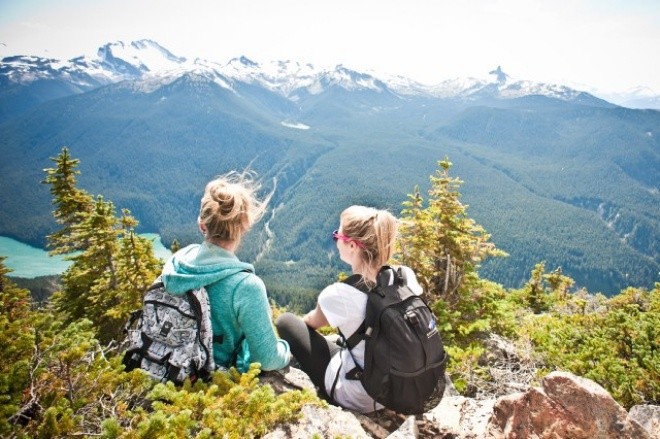
There is something deeply grounding about stepping onto a trail in Whistler. Hikes in Whistler invite you to slow down, breathe deeper, and connect with the landscape in a way that feels both invigorating and restorative. While alpine routes can take a little longer to melt out, many valley and mid-mountain trails are ready early in the season, offering rewarding hikes without the crowds or technical challenges of peak summer.
From gentle lakeside walks to full-day adventures that push you into Whistler’s dramatic backcountry, these hikes showcase the range of experiences that make time on the trail so special. Lace up your boots, pack some snacks, and make room on your itinerary for a few hours outside. You will be glad you did.
Cheakamus Lake: An Easy Hike in Whistler
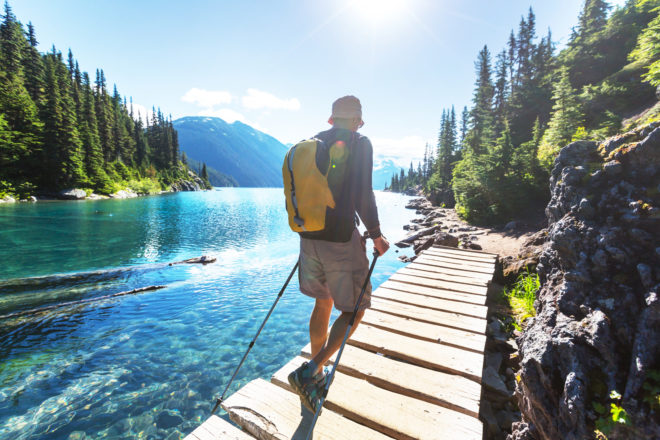
If you are looking for a relaxed introduction to hiking in Whistler, Cheakamus Lake is hard to beat. This gently rolling trail winds through dense forest before opening onto a glacial-blue lake that feels almost unreal on a calm day.
The route is well marked and approachable for families, casual hikers, and even confident cyclists. It is about three kilometres to reach the lake, with the option to continue along the shoreline for several more kilometres if you want to linger a little longer. Reflections on the water, picnic spots, and quiet forest moments make this a hike that feels restorative rather than rushed.
Ancient Cedars Trail, One of the Most Peaceful Hikes in Whistler
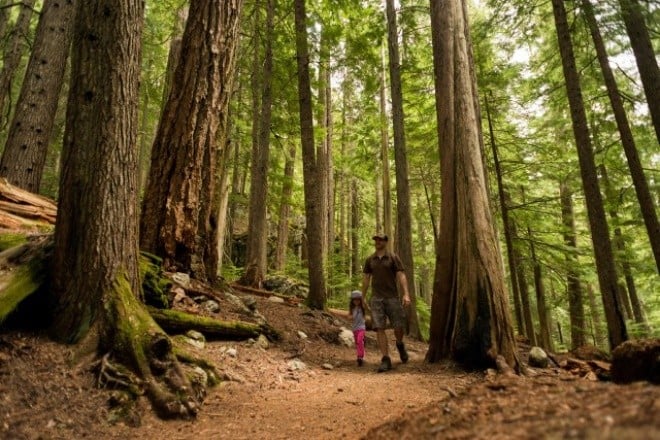
Just north of Whistler near Cougar Mountain, the Ancient Cedars Trail offers a powerful reminder of how long these forests have stood. Recently revitalized, this loop trail includes gentle climbs and rolling terrain, but the reward at the end is unforgettable.
Massive western red cedars rise from the forest floor, their size and age impossible to ignore. Walking among them feels humbling and peaceful, making this a perfect choice for a shorter hike with a big emotional payoff. The full loop is roughly five kilometres and can be completed comfortably in under two hours.
Flank Trail for Longer Hikes
For those who enjoy covering ground and watching landscapes change, the Flank Trail delivers. Beginning near Alta Lake Road in Alpine Meadows and stretching south toward Function Junction, this point-to-point trail offers long forest sections, occasional climbs, and wide valley views.
At roughly 16 kilometres one way, planning transportation at the far end is recommended. This is less about summiting and more about the journey, with plenty of moments that make you stop, look around, and appreciate how expansive Whistler’s valley really is.
High Note Trail, One of the Most Scenic Hikes in Whistler
When Whistler Mountain opens for summer sightseeing, the High Note Trail quickly becomes a must-do. Starting near the Peak Chair, this mostly downhill route wraps around the mountain, delivering one stunning viewpoint after another.
The trail is well maintained, with some narrow and rocky sections that keep things interesting without feeling overwhelming. Wildflowers often line the path, and views stretch across glaciers, peaks, and valleys below. Ending conveniently at the Roundhouse, this nine-kilometre hike usually takes around four hours and pairs beautifully with a gondola ride down.
Singing Pass Trail for Challenging Hikes in Whistler
If you are craving a longer challenge with a true sense of accomplishment, the Singing Pass Trail is a classic Whistler experience. Instead of taking the gondola, this route climbs steadily from the valley up Whistler Mountain.
Spanning roughly 22 kilometres, the elevation gain is gradual, making the effort feel manageable despite the distance. Once you break above the treeline, the scenery opens dramatically into backcountry terrain. Many hikers add a side trip to Russet Lake, which sits about two kilometres off the main trail and is well worth the extra effort. The trail finishes at the Roundhouse, where a gondola ride down feels well earned.
Black Tusk, An Iconic Backcountry Hike
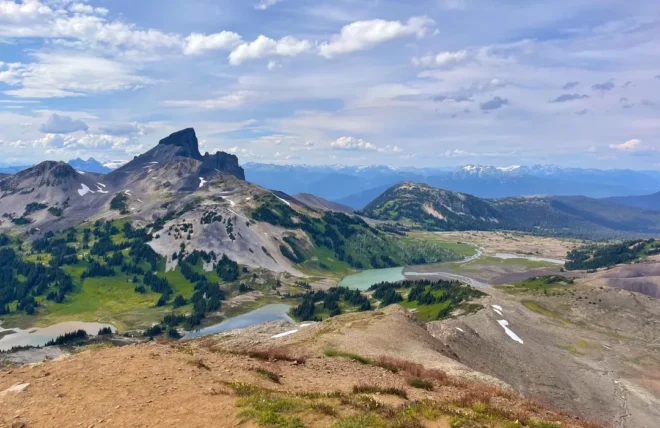
Few hikes are as iconic as Black Tusk. Recognizable from miles away, this volcanic spire is a bucket-list goal for many hikers visiting Whistler.
The round-trip hike covers approximately 29 kilometres and can be tackled in a long day or split into an overnight adventure with camping along the way. The terrain changes constantly, from forest to alpine meadows to rocky climbs, and the views grow more dramatic with every step. Reaching the base of the Tusk is a powerful moment that stays with you long after you return to the valley.
Day-Use Permits for Popular Hikes in Whistler
Some of Whistler’s most well-known hikes are located within Garibaldi Provincial Park, which means a free day-use permit is required during peak hiking season. This system helps manage trail traffic and protect sensitive alpine environments.
Hikes in this guide that require a day-use permit include:
Cheakamus Lake
Singing Pass Trail
Black Tusk
Day-use permits are typically required from late spring through early fall and must be reserved in advance. Permits are free, but availability can be limited on busy weekends and holidays, so planning ahead is strongly recommended.
Permits are issued through BC Parks, and hikers must carry proof of their reservation, either printed or on a mobile device. Rangers may check permits at trailheads, especially during peak season.
To reserve your permit and confirm current requirements, visit the BC Parks Day-Use Pass page before heading out.
Good to know: Overnight trips into Garibaldi Provincial Park require a separate backcountry camping permit, and day-use permits do not apply to hikes outside park boundaries.
Bonus Family-Friendly Hike, Train Wreck Trail
If you are hiking with young kids or simply want something playful and memorable, the Train Wreck Trail is a must. This short, mostly flat trail follows the Cheakamus River and leads to a series of brightly painted train cars scattered through the forest, remnants of a derailment from decades ago.
The walk itself is manageable for little legs, with wide paths and plenty to look at along the way. Suspension bridges, river views, and the excitement of spotting the first train car keep kids engaged from start to finish. Once you arrive, the colourful artwork and open space invite exploration, imagination, and plenty of photo-worthy moments.
It is less about distance or elevation and more about discovery, making this an ideal hike for families, mixed-ability groups, or anyone easing into hiking in Whistler. Bring snacks, take your time, and let the adventure unfold at kid speed.
Planning Your Hiking Days in Whistler
Conditions change quickly in the mountains, especially early in the season. Always check trail reports, pack layers, and bring more water and food than you think you will need. Starting earlier in the day helps you avoid afternoon heat and gives you flexibility if you want to linger at viewpoints.
Many of these hikes pair perfectly with a relaxed evening in the village, a lakeside dinner, or a well-earned soak. Balance is part of the Whistler experience.
Make the Most of Your Stay
Hiking days are better when everything else feels easy. At Whistler Reservations, our local team helps you choose accommodation that puts you close to the trails you want to explore, while offering comfort to come back to at the end of the day.
If hiking is the heart of your Whistler getaway or part of a larger mountain adventure, we are here to help you plan a stay that flows naturally, leaving you free to focus on the trail ahead.